Skip to content
PEPLUX

Metabolic coenzyme

NAD+

Also called NAD, Nicotinamide adenine dinucleotide.

  • Energy
  • Cognition
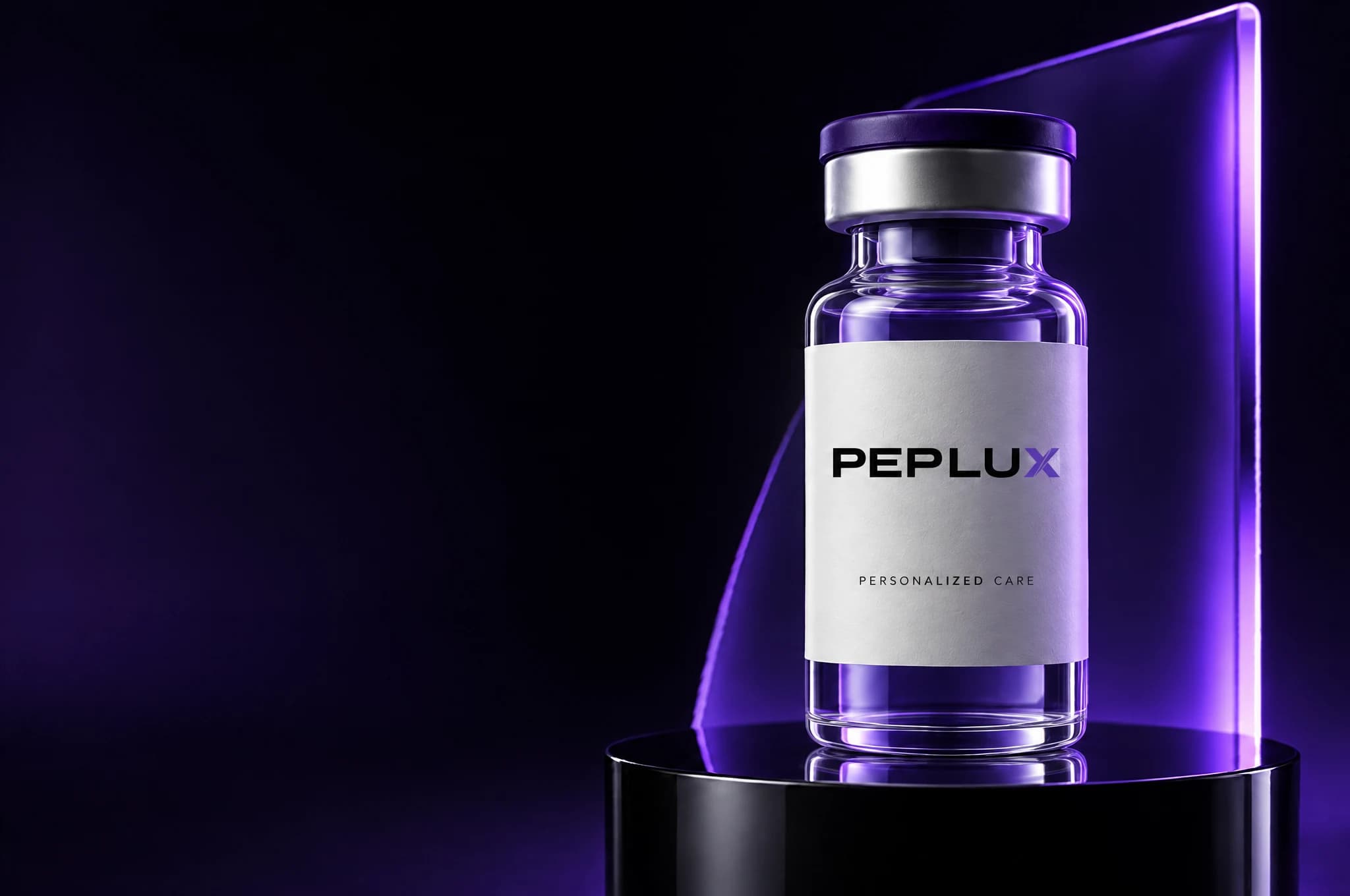
Illustrative PEPLUX product vial in a purple-lit studio
Product illustration

Product form

Subcutaneous injection or nasal spray

The process

Licensed provider review

NAD+ cost

$229 per month

*If medically eligible.
Medication
Included
Clinician visit
Included
Baseline labs
Included
Lab retests
Included when ordered by your provider
Shipping
Included
Patient portal access
Included
Care-team chat support
Included

Considering more than one product?

  • Two products prescribed together: $349 per month
  • Three products prescribed together: $479 per month
Compare pricing

Compounded medications are not approved by the FDA and have not been reviewed for safety, effectiveness, or quality.

FDA status, checked on October 13, 2026
Order now

In FDA's Category 1 for 503A pharmacies and 503B outsourcing facilities: interim enforcement discretion, not the bulks list.

*If medically eligible.

Compounded medications are not approved by the FDA and have not been reviewed for safety, effectiveness, or quality.

PEPLUX is a telehealth platform, not a pharmacy or drug manufacturer. Medications are compounded and dispensed by independently licensed US compounding pharmacies.

Prescription products require an online evaluation with a licensed provider. Not all patients qualify.

States served: not yet confirmed. How state availability works

What is NAD+?

NAD+ (nicotinamide adenine dinucleotide), in the form FDA lists in Category 1. The disodium salt trihydrate form is excluded.

Adults interested in discussing NAD+ with a licensed provider, with separate consideration of the subcutaneous and nasal formats. Whether either formulation is appropriate depends on the individual evaluation and the limits of the evidence.

Key risks

  • Subcutaneous injection can cause pain, redness, swelling or bruising at the site. Infection is possible if the product or injection technique is not sterile.
  • Not for anyone with a known allergy to NAD+ or to another ingredient in the preparation.
All risks and who should not use it

FDA status

FDA status for NAD+.

Rendered from our regulatory records, which cite FDA, Federal Register and label documents directly. Each record shows the date we last checked it.

In FDA's Category 1 for 503A pharmacies and 503B outsourcing facilities: interim enforcement discretion, not the bulks list.

NAD+

FDA interim enforcement discretion (Category 1). Not a listing. Not FDA-approved.

FDA’s documents list it as Nicotinamide Adenine Dinucleotide (NAD).

NAD+ is in FDA's Category 1 for both 503A pharmacies and 503B outsourcing facilities. Category 1 means FDA is still evaluating the substance and has said it does not intend to take action against compounding with it while its interim policy's conditions are met. That is enforcement discretion, not a listing, and FDA can change it. Compounded NAD+ is not FDA-approved. FDA does not check the safety, effectiveness or quality of compounded drugs before they are sold.

NAD+ is the oxidized form. NADH, the reduced form, is a separate substance with its own FDA entry and its own status record.

Basis
FDA's 503A categories document (updated May 14, 2026) lists "Nicotinamide Adenine Dinucleotide (NAD)" in Category 1, bulk drug substances under evaluation. FDA's 503B categories document (updated March 21, 2025) lists "Beta-Nicotinamide Adenine Dinucleotide" in Category 1. Both documents place the disodium salt trihydrate form in Category 3, so that form is excluded. NAD+ is not on the 503A bulks list in 21 CFR 216.23 and not on the 503B bulks list. Category 1 is FDA's interim enforcement discretion, not a statutory pathway.
Checked on
October 13, 2026

How it works

NAD+ mechanism.

NAD+ (nicotinamide adenine dinucleotide) is a coenzyme present in every cell, required for mitochondrial energy production and for the function of enzymes involved in DNA maintenance and cellular signaling.

That describes what the molecule does in the body. It is not a claim about what it will do for you.

What the evidence supports

NAD+: evidence and limitations.

The biochemistry of NAD+ is well characterized, but that does not establish clinical benefit from a particular product. Human research often studies oral precursors rather than NAD+ itself. Evidence from precursors, injections or another formulation cannot establish the absorption, safety or effectiveness of this nasal formulation. Safety and effectiveness for the listed subcutaneous and nasal products have not been established.

Risks

NAD+ risks and side effects.

  • Subcutaneous injection can cause pain, redness, swelling or bruising at the site. Infection is possible if the product or injection technique is not sterile.
  • Not for anyone with a known allergy to NAD+ or to another ingredient in the preparation.
  • The adverse effects and longer-term safety of this nasal formulation have not been established. Injection-related experience cannot define its risks.
  • The safety of repeated use of either listed formulation over months has not been established.
  • Safety in pregnancy and breastfeeding has not been studied.

This information is educational and is not medical advice. It does not establish a provider–patient relationship.

Clinical review

What your prescriber will consider.

These are decision factors a licensed provider weighs when deciding whether this product is appropriate for you. They are not instructions, and there is no dosing protocol on this page.

  • What you are actually trying to change, and how you would know if it worked

  • The intended route and exact formulation, including how it is absorbed and what evidence applies to it

  • Whether an established evaluation or treatment should come first

  • Interaction with your existing supplements and medications

PEPLUX does not publish self-administration protocols. Dose, frequency and duration are set by your prescriber against your own history and reviewed over time.

Lot documents

What a certificate of analysis should cover.

When a pharmacy is named, each lot's certificate of analysis is expected to cover the tests below. No certificate exists or is published yet.

  • Potency
  • Sterility
  • Endotoxin
  • pH

Sport and anti-doping

WADA status.

  • Not named on the WADA 2026 Prohibited List. Separately, WADA method M2.2 prohibits intravenous infusions or injections of more than a total of 100 mL per 12-hour period, except those legitimately received in the course of hospital treatment, surgery or clinical investigations.

The list is revised every year. If you compete, check the current list and your federation’s own rules.

Straight answers

Common questions about NAD+.

What is the FDA status of NAD+?
In FDA's Category 1 for 503A pharmacies and 503B outsourcing facilities: interim enforcement discretion, not the bulks list. NAD+ is in FDA's Category 1 for both 503A pharmacies and 503B outsourcing facilities. Category 1 means FDA is still evaluating the substance and has said it does not intend to take action against compounding with it while its interim policy's conditions are met. That is enforcement discretion, not a listing, and FDA can change it. Compounded NAD+ is not FDA-approved. FDA does not check the safety, effectiveness or quality of compounded drugs before they are sold. Checked against primary sources on October 13, 2026.
Is compounded NAD+ an approved drug?
No. Compounded medications are not approved by the FDA and have not been reviewed for safety, effectiveness, or quality. PEPLUX is a telehealth platform, not a pharmacy or drug manufacturer. Medications are compounded and dispensed by independently licensed US compounding pharmacies.
What does the evidence support for NAD+, and what does it not?
The biochemistry of NAD+ is well characterized, but that does not establish clinical benefit from a particular product. Human research often studies oral precursors rather than NAD+ itself. Evidence from precursors, injections or another formulation cannot establish the absorption, safety or effectiveness of this nasal formulation. Safety and effectiveness for the listed subcutaneous and nasal products have not been established.
What are the risks of NAD+?
Subcutaneous injection can cause pain, redness, swelling or bruising at the site. Infection is possible if the product or injection technique is not sterile. The full list of side effects, and of who should not use NAD+, is in the risks section of this page. Your prescriber reviews your history before deciding whether it is appropriate for you.
Does NAD+ require baseline labs?
No. NAD+ does not require baseline labs, though your prescriber may order them based on your history. Baseline labs are included in the price.
What does NAD+ cost?
$229 per month. Medication: included. Clinician visit: included. Baseline labs: included. Lab retests: included when ordered by your provider. Shipping: included. Patient portal access: included. Care-team chat support: included. *If medically eligible.
Is NAD+ prohibited in sport?
Not named on the WADA 2026 Prohibited List. Separately, WADA method M2.2 prohibits intravenous infusions or injections of more than a total of 100 mL per 12-hour period, except those legitimately received in the course of hospital treatment, surgery or clinical investigations.
How is NAD+ given?
Subcutaneous injection or nasal spray. Your prescriber decides whether it is appropriate for you and sets the regimen. PEPLUX does not publish dosing.

Next step

A licensed provider reviews every request.

Order now

In FDA's Category 1 for 503A pharmacies and 503B outsourcing facilities: interim enforcement discretion, not the bulks list.

*If medically eligible.

Compounded medications are not approved by the FDA and have not been reviewed for safety, effectiveness, or quality.